
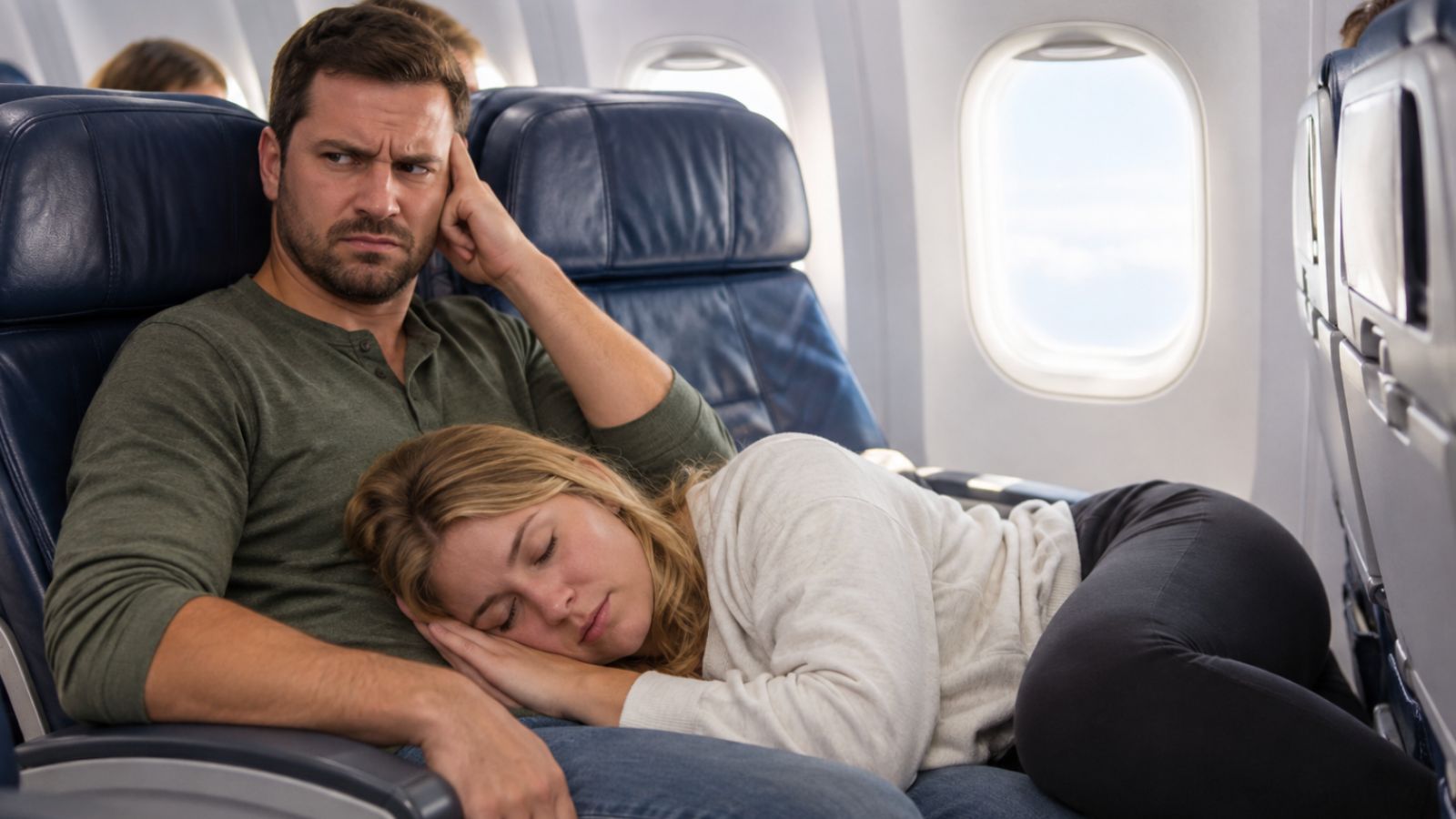
She Begged to Sit in His Empty Extra Legroom Seat, Then Sprawled Across Both Seats and Refused to Move When He Objected
The whole flight was a five-hour stretch on a budget airline where even the standard seats run tight, so paying extra for the emergency aisle window seat felt worth it, especially with a packed activity-filled weekend on the other end. Arriving a bit more rested seemed like a reasonable thing to spend a little extra on.
As it turned out, both the middle and aisle seats stayed empty for the first hour, which meant a full row and all that extra legroom, a genuine bonus. A sweater and headphone case sat on the middle seat, nothing serious, just claiming a bit of the space that wasn’t being used by anyone.
A Request to Sit, Followed by Something Else Entirely
About an hour into the flight, an older woman asked if the seats were taken. Told no, she asked to sit, and permission was given without hesitation, since the extra space wasn’t strictly necessary to defend, and the assumption was she’d settle into the aisle seat like anyone else would.
Instead, she brushed the sweater and headphone case off the middle seat directly toward her seatmate, then lay down across both vacant seats with her head resting on the armrest, hair nearly in her lap. After about 30 seconds of genuine disbelief, a gentle tap and a clear statement followed: that armrest was being used. Her response was to explain how tired and sore she was, how badly she needed to lie down, then return to the exact same position anyway.
Why the Flight Attendant Was the Right Call
At that point, getting up and flagging a flight attendant directly was the reasonable move, rather than continuing to negotiate with someone who’d already ignored a clear, polite boundary once. Explaining that this passenger wasn’t in the seat she’d actually paid for framed the issue accurately: this wasn’t a dispute over sharing space generously offered, it was someone taking over paid seating without consent and refusing to respect a direct request to stop.
Why the Airline’s Response Handled It Perfectly
The flight attendant’s approach cut straight through the situation. Bringing over the payment terminal and simply stating she was welcome to sit there, provided she paid for it, sidestepped the woman’s attempt to reframe this as a matter of sympathy or exhaustion. When she launched back into her story about being tired and sore, the flight attendant’s flat response, essentially “understood, so if you have a card, you can pay,” refused to let personal discomfort function as a justification for occupying seats that belonged to someone else.
That response worked because it didn’t engage with the manipulation at all. It simply restated the actual, factual condition under which she could remain there. She got up and returned to her own seat.
Why Paying Extra Doesn’t Obligate Anyone to Share Indefinitely
There’s a real distinction between generously allowing someone to sit in empty, paid-for space out of simple courtesy, and that same person then taking that generosity as license to fully occupy the space, including sprawling across it and using another passenger’s body as an armrest substitute. Saying yes to “can I sit here” is not the same as agreeing to give up personal space, comfort, or the very seat that had been specifically paid extra for in the first place.
Setting a boundary once she’d clearly overstepped, and escalating to crew once that boundary got ignored, wasn’t unreasonable or uptight. It was a direct, appropriate response to someone testing how far an initial kindness could be stretched.
Where This Left Things
The situation resolved cleanly, no prolonged conflict, no continued discomfort for the rest of the flight, just a firm boundary backed up by crew who weren’t interested in entertaining an emotional appeal over a straightforward seating rule. Paying for a specific seat, then extending some generosity when nearby seats sat empty, doesn’t mean surrendering the right to actually use the space that was paid for in the first place.
Featured on Happy From Home: