
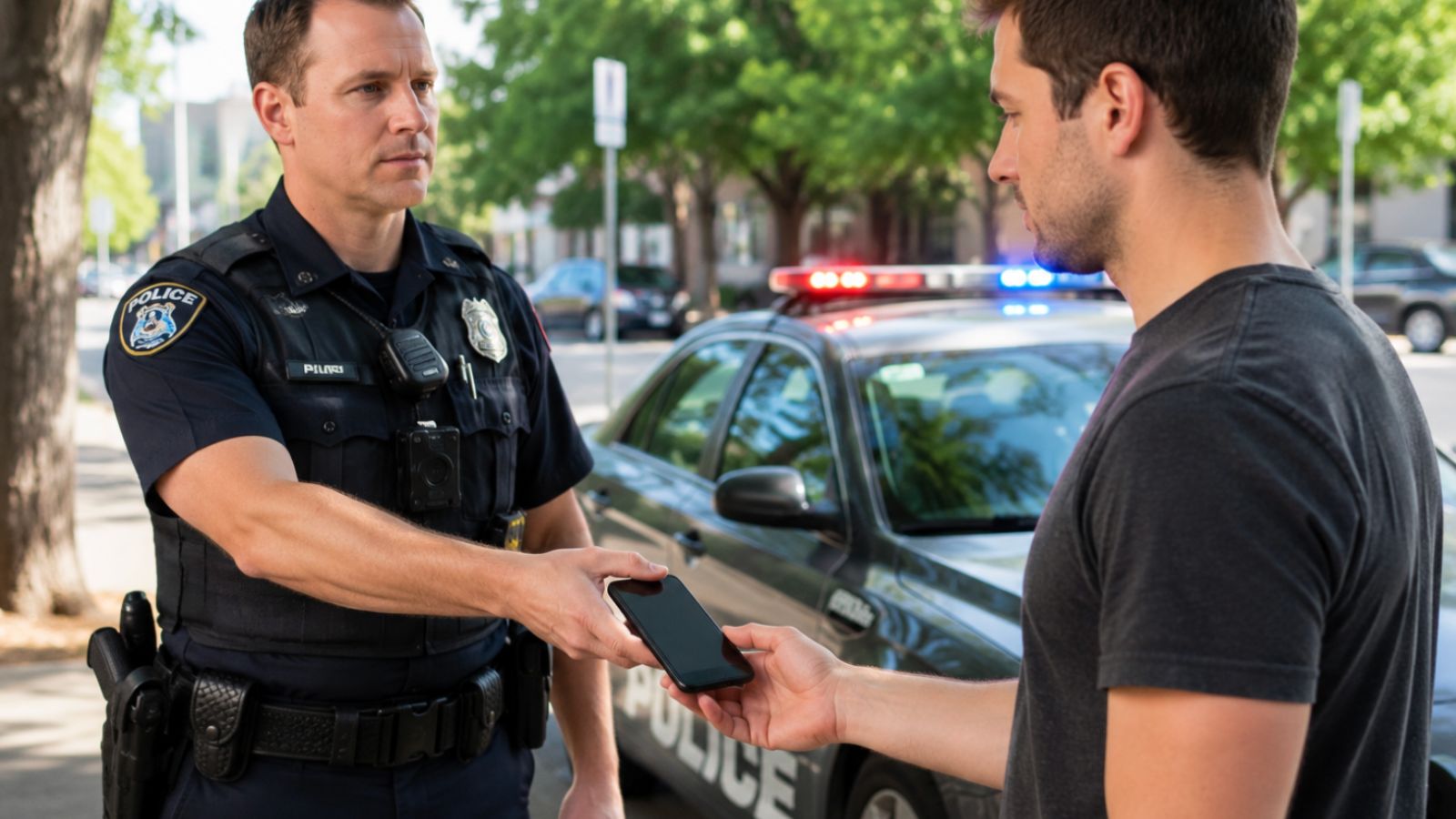
A Gwinnett County Officer Seized His Phone During a Search Warrant and Returned It Behind a Gas Station the Next Day With an Apology Instead of Through Any Official Evidence Return Process
A search warrant had been executed at his residence in Gwinnett County, Georgia, during which the lead officer seized his cell phone as part of the search. The following day, that same officer called his mom directly, telling her he needed to meet within a couple of hours or the phone would be formally submitted as evidence. Once he reached out himself, the officer directed him to meet behind a gas station rather than at a police station or any other official location, where the phone was ultimately handed back, accompanied by an apology for the raid and a lecture lasting around 20 minutes.
He was left feeling that the entire interaction was strange and unprofessional, prompting him to sort through what that exchange might actually mean, both in terms of what may have happened to his phone’s data during police custody, and whether the handoff process itself represented a real departure from how evidence is typically handled.
Why the Meeting Location Itself Raises Questions
Property seized under a search warrant is generally expected to follow a documented chain of custody, meaning its handling, storage, and eventual return or submission as evidence typically occurs through official channels, evidence lockers, formal property release processes, documented sign offs, rather than informal meetups arranged through personal phone calls to a family member. A location like behind a gas station, rather than a police station or another official setting, departs meaningfully from that kind of standard, documented process.
That departure matters beyond simply seeming unusual. If his phone was genuinely being considered for use as evidence at any point, its handling needed to follow a chain of custody procedure specifically to preserve its evidentiary integrity. An informal handoff outside any official setting introduces real questions about whether that chain of custody was actually maintained properly, which could matter significantly if the phone’s contents or handling ever became relevant to any legal proceeding down the line.
Why the Deadline and Pressure Tactic Stand Out
Being told the phone needed to be retrieved within a couple of hours or it would be turned in as evidence adds another layer worth examining closely. Under normal circumstances, whether a seized item gets formally entered as evidence typically depends on its relevance to an active investigation, not on how quickly the owner responds to a phone call. Framing the decision as contingent on a tight personal deadline suggests either genuine confusion about proper evidence procedures on the officer’s part, or an informal, off the books approach to handling the situation that didn’t follow standard protocol.
Why the Data on the Phone Deserves Real Scrutiny
Whether the phone was cloned, copied, or searched without proper authorization during the time it was in police custody is a genuinely important question, and not one easily answered without legal assistance specifically capable of investigating what actually happened. Law enforcement generally needs separate legal authorization, either explicitly covered under the original search warrant’s scope or through an additional warrant specifically covering digital device data, before extracting or searching the contents of a phone. A search warrant covering a residence doesn’t automatically extend blanket authority to fully search or copy everything on a device seized during that search, depending on how the original warrant was worded and what it specifically authorized.
If the phone’s data was accessed, copied, or searched beyond what the original warrant actually permitted, that could represent a genuine Fourth Amendment concern worth raising directly with legal counsel, since evidence obtained through an improperly conducted search can sometimes be challenged or excluded depending on the specific circumstances involved.
Why Involving His Public Defender Makes Sense
Given the irregular handling of the property return itself, the pressured timeline, and the unclear scope of what may have happened to the phone’s data while in police custody, this is exactly the kind of situation worth raising directly with his public defender rather than trying to sort through independently. A public defender would be positioned to formally request documentation on the phone’s chain of custody, determine what authorization, if any, existed for searching or copying its contents, and evaluate whether anything about this specific sequence of events might affect the broader case.
Raising this proactively, rather than assuming the odd handling was simply unimportant, gives his legal representation the opportunity to investigate whether proper procedure was actually followed, information that could matter considerably depending on how the case develops going forward.
What This Situation Suggests Overall
The specific pattern here, seizure during a properly executed warrant, followed by an informal, pressured, off site return process, deviates enough from how evidence and seized property are typically handled that it’s reasonable to treat this as worth real scrutiny rather than dismissing it as simply an odd but harmless interaction. Bringing the full sequence of events to his public defender, including the specific timeline, the location of the handoff, and any details he can recall about what was said during that 20 minute conversation, would give his legal team the clearest picture possible for evaluating whether anything about this process needs to be formally challenged or investigated further.
Featured on Happy From Home:
- Woman Who Put Down $100,000 on Her House Before Her Boyfriend Moved In Says He Has Started Calling It a Waste of Money Because He Has No Legal Claim to It After Two Years of Contributions
- Father Who Searched for a Missing 4-Year-Old While Managing His Own Two Young Children Says the Boy’s Dad Who Was Home Watching TV Is Now Demanding an Apology From Him for Not Watching Closely Enough