
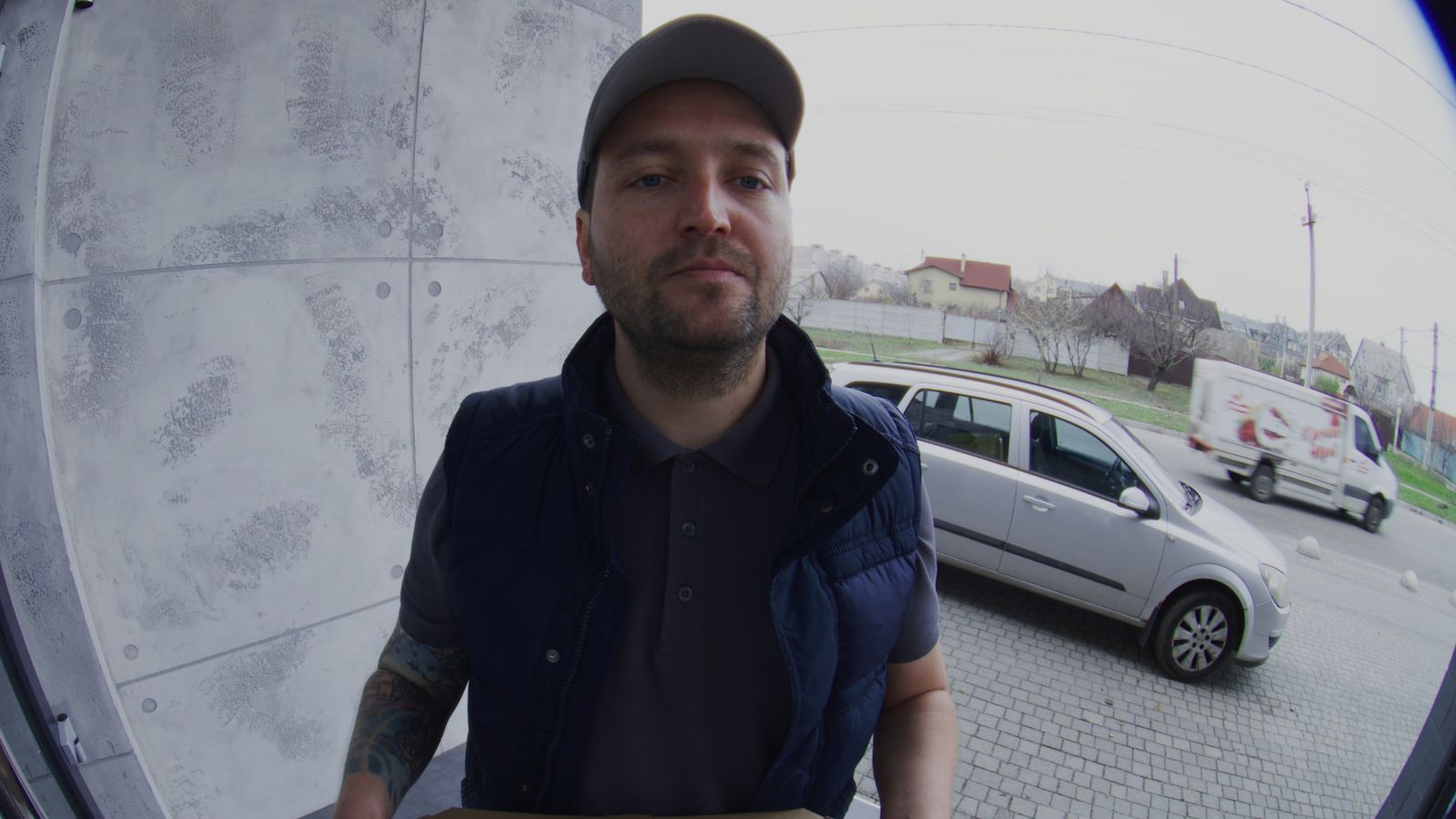
Man Says a Stranger Claiming to Be an Uber Driver Knocked on His Door 11 Minutes After His Wife Left for the Airport Asking for Someone Who Does Not Live There and Froze When He Saw the Security Camera
His wife’s Lyft pulled away and he went back inside. Eleven minutes later, someone knocked on the door. The man standing there said he was from Uber and had a package to deliver to someone named Brian at that address. Neither he nor any of his immediate neighbors goes by that name. The man didn’t have a package with him. He gestured vaguely toward his car when the subject came up but produced nothing.
This article may contain affiliate links. See our disclosure policy for more info.
The timing was the first thing that stood out. He and his wife had been outside with her suitcases for a stretch of time before the car arrived, visible to anyone passing by or watching the street. A woman leaving with luggage is a recognizable signal that a household is about to have one fewer person in it, and possibly none. Eleven minutes after that departure, a stranger appeared at the door with a story that didn’t hold together.
What the Camera Caught
He reviews security footage regularly enough to know what normal looks like. Delivery drivers walk up, knock or ring, and either wait or leave a package. What the camera captured this time was different. The man walked up the steps, knocked, and then stopped cold when he noticed the camera mounted beside the door. He stared directly at it for several seconds before turning back toward the door. Not a glance. Not a brief acknowledgment. A frozen pause that lasted long enough to be noticeable on playback.
He’s had countless deliveries at that address. He’s never seen anyone react to the camera that way.
Why the Story Doesn’t Add Up
Uber does have a package delivery service, but the mechanics of how it works don’t match what was described at the door. Drivers using the service are dispatched through the app to specific pickups and drop-offs. They don’t show up at residential addresses asking for a named recipient with no package visible, no app confirmation to reference, and no ability to produce the item they’re supposedly delivering. The cover story had the shape of a delivery scenario without any of the details that would make it credible.
The name Brian added another layer. A legitimate misdirected delivery involves a real package and a real address mix-up. Arriving at a house, asking for a name that matches no one in the immediate area, and being unable to produce the package being referenced describes something else entirely.
What This Pattern Looks Like
What he’s describing matches a known reconnaissance approach used to confirm whether a home is occupied before an attempted break-in. Someone visibly leaving with luggage establishes that at least one resident is gone. A knock at the door shortly after serves two purposes. If someone answers, the knocker has a cover story ready and can assess who’s inside and whether the house is vulnerable. If no one answers, that’s the confirmation that the departure left the property empty.
The camera freeze is consistent with that scenario. Someone conducting a legitimate errand doesn’t stop and stare at a doorbell camera for several seconds. Someone who wasn’t expecting to be recorded and is calculating what that means does.
What He Should Do With the Footage
The footage is the most valuable thing he has right now. He should save a copy off the camera system immediately and not rely solely on whatever auto-deletion cycle the device uses. If the same person appears in the neighborhood again or if anything happens nearby, that footage becomes relevant to law enforcement and potentially to neighbors who experienced something similar.
Filing a non-emergency report with local police is worth doing even if nothing came of the visit. It creates a record of the date, time, and description of the individual, and if other reports come in from the same area with similar details, the pattern becomes visible to investigators in a way it wouldn’t be if everyone assumed their individual incident was too minor to mention.
The Household Vulnerability That Created the Opening
The visible departure with luggage is the starting point of the whole sequence, and it’s a common one. People leaving for trips, moving furniture, loading cars for moves or vacations are all observable signals that a property’s status is changing. Neighbors who know each other and watch out for unfamiliar activity around each other’s homes are a meaningful deterrent, as is varying departure routines when possible to avoid establishing recognizable patterns.
He trusted his instincts, stayed inside, and has footage of someone who clearly wasn’t expecting to be on camera. That combination puts him in a better position than most people who encounter something similar and dismiss it as a harmless mix-up.
Featured on Happy From Home: