
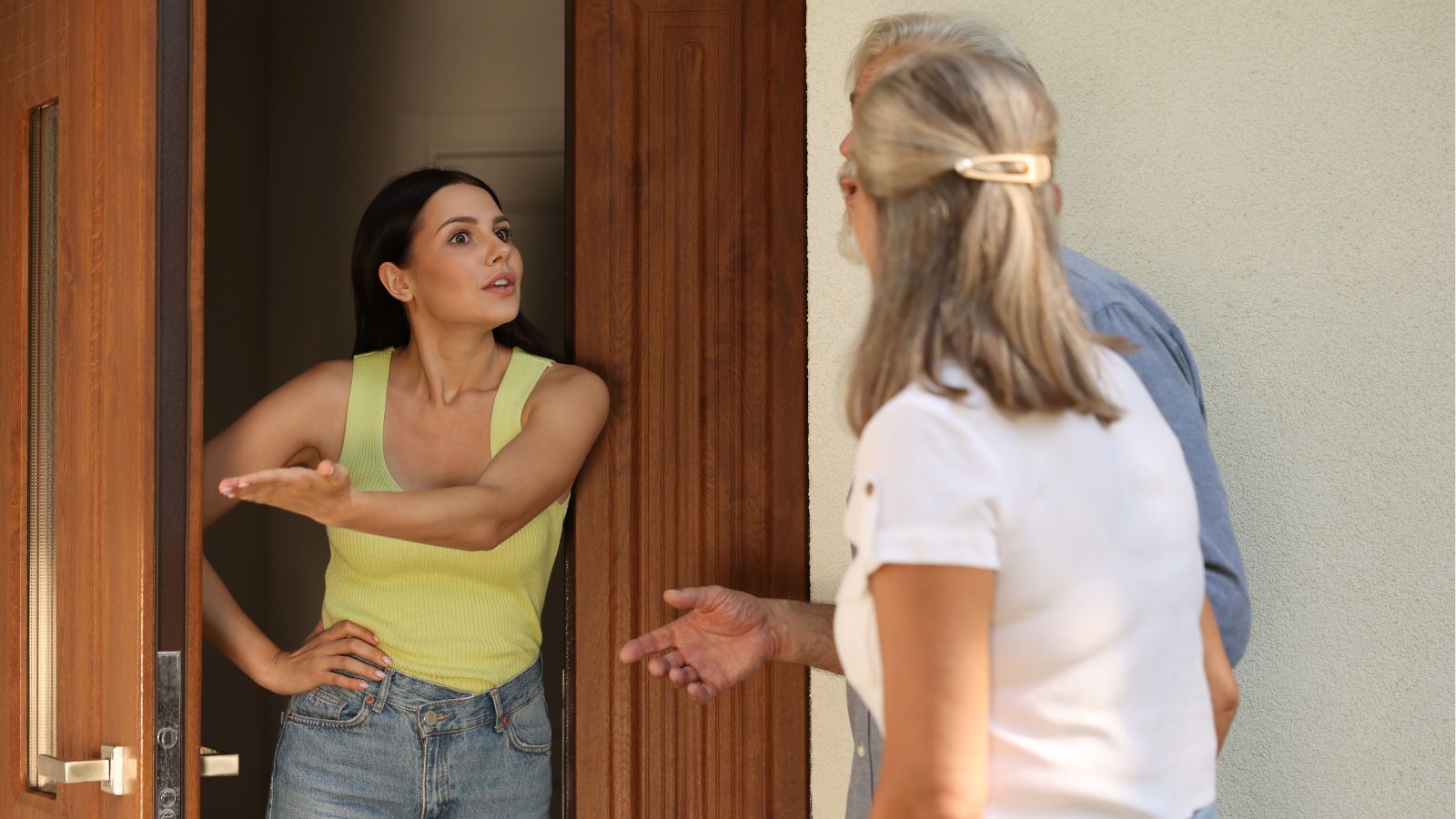
Her Neighbors Have Never Once Acknowledged Her Family on the Street, Came Back Three Times Implying She Was Hiding a Child’s Ball, Then She Overheard Them Suggesting Her Family Can’t Be Trusted
That’s the situation one homeowner is dealing with after years of being ignored by the neighbors next door. They don’t acknowledge her family on the street, they don’t engage the way they do with everyone else in the area, and the dynamic has always carried an undertone she can’t quite name but has never been able to shake.
This article may contain affiliate links. See our disclosure policy for more info.
When their young son lost a ball and it might have ended up in her garden, she went out of her way to look for it and was honest when she couldn’t find it. That should have been the end of it. Instead they’ve come back twice more asking the same question, and today she overheard one of them telling another neighbor they wouldn’t want to leave a bike lying around with “these ones” nearby.
The History That Makes This Land Differently
If this were a warm and friendly set of neighbors, three visits about a child’s lost ball would read as persistence born out of hope, not accusation. The child probably loved the ball, the parents are trying to help, and maybe it rolled somewhere nobody has spotted yet. That’s a reasonable interpretation in a vacuum.
But it doesn’t exist in a vacuum. It exists inside years of being looked through on the street, of watching those same neighbors engage warmly with everyone around them while giving her family nothing. That history changes how the repeated visits feel, because the only time these neighbors have knocked on her door is to ask about something they think might have been taken. The pattern isn’t lost on her, and it wouldn’t be lost on most people in her position.
What the Comment Actually Said
The bike comment is the part that moves this from uncomfortable to genuinely hurtful. Overheard comments are always tricky because context is incomplete and tone doesn’t always carry the way the speaker intended. But “you wouldn’t want to leave your bike lying around here with these ones” said within earshot while standing near her family’s home doesn’t have many neutral interpretations. It implies that the people nearby aren’t trustworthy, and the repeated visits about the ball give that implication a specific target.
She’s been careful not to jump to conclusions, and that restraint speaks well of her. But acknowledging that something felt insulting and hurtful doesn’t require certainty about intent. She heard something that landed as a slight against her family’s character, coming from people who have never treated them as equals in the neighborhood, and that’s worth taking seriously regardless of whether it was meant exactly as she heard it.
What the Repeated Visits Are Communicating
Three visits to the same house about the same missing item, after being told twice that it isn’t there, communicates something. It might be that the parents are genuinely at a loss and are circling back out of desperation to find something their child cares about. It might also be that they don’t fully believe what they’ve been told and keep returning because they think another visit will produce a different answer.
She can’t know which of those is true, and the honest answer is probably somewhere in between. What she can know is that she’s been helpful, she’s been honest, and she’s done everything a reasonable neighbor would do when asked about a lost item. At this point continuing to search or apologize for not having it isn’t something she owes anyone.
How to Handle the Next Visit
If they come back a fourth time, a calm and direct response closes the loop without escalating anything. Something that acknowledges she understands they’re still looking, confirms clearly that the ball isn’t in her garden and hasn’t turned up, and gently signals that she’s answered this question as thoroughly as she can. Keeping it brief and matter-of-fact removes the emotional charge from the interaction without being rude, and it makes clear that another visit isn’t going to produce new information.
She doesn’t need to raise the comment she overheard or address the years of coldness in that moment. That conversation, if it ever happens, belongs in a different context than a doorstep exchange about a missing ball. For now, the goal is to end the visits without creating a conflict that spills into the wider neighborhood.
The Bigger Picture
What she’s really describing is a situation where people who have never respected her family are now, in her read of events, using a child’s lost toy as a vehicle for something that feels like suspicion or judgment. That’s an exhausting dynamic to navigate, especially when you’ve done nothing wrong and have been nothing but cooperative.
The ball is probably gone, kicked into a hedge somewhere or picked up by someone passing through weeks ago. At some point the neighbors are going to have to accept that and move on, and there’s nothing she can do to speed that up. What she can do is stay consistent, stay calm, and refuse to let their attitude about her family become her problem to manage.
Featured on Happy From Home:
- Man Wants a Paternity Test After Noticing a Two-Year-Old Who Looks Just Like Him and the Timing Lines Up With a Relationship He Had Three Years Ago
- Woman Who Put Down $100,000 on Her House Before Her Boyfriend Moved In Says He Has Started Calling It a Waste of Money Because He Has No Legal Claim to It After Two Years of Contributions