
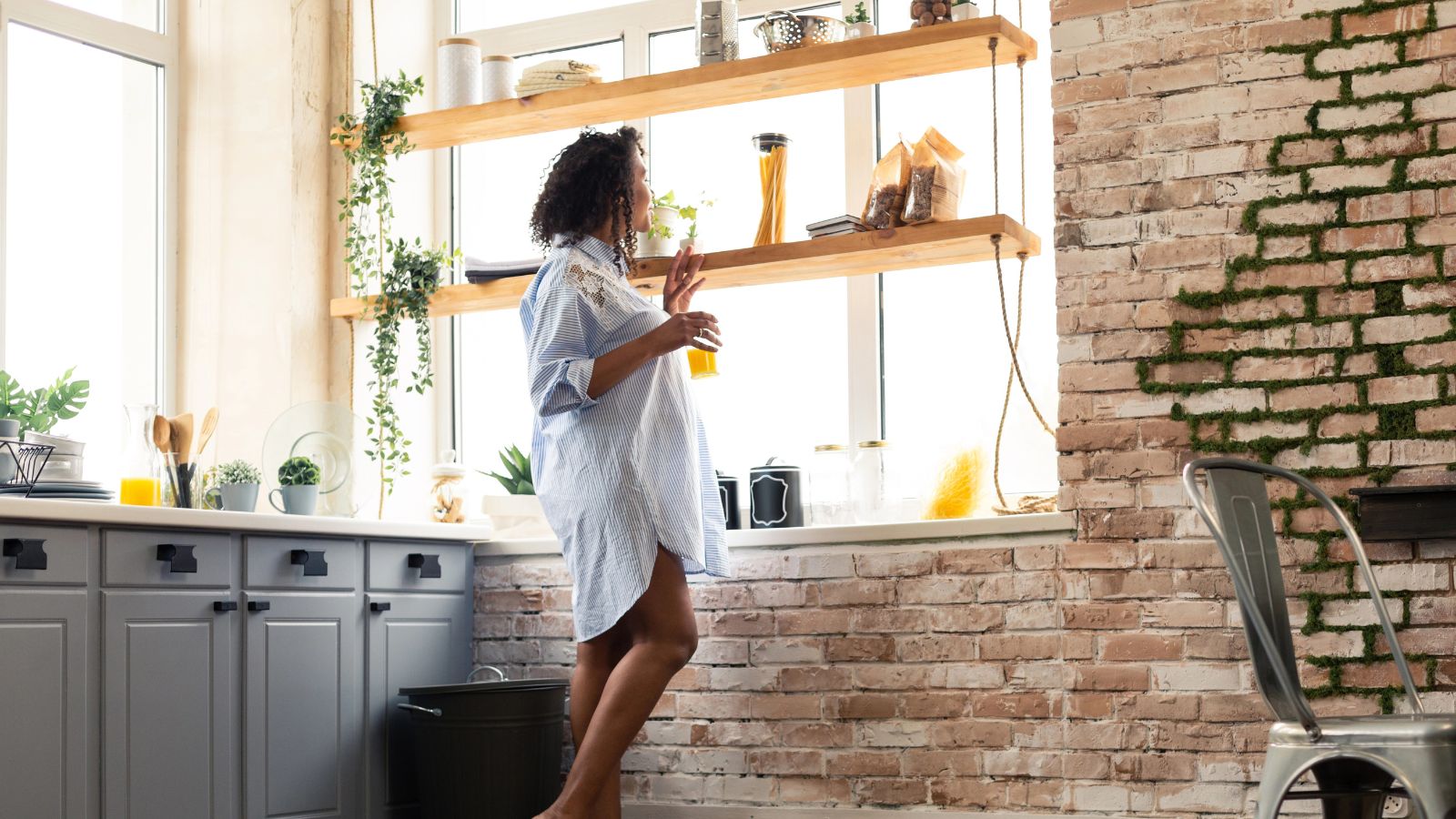
Her New Neighbor’s Security Camera Is Angled Straight Into Her Kitchen Window and She’s Been Closing the Blind Every Evening and Worried To Walk Through Her Own House in a Towel for Months
New neighbors had moved in that March, and things had been entirely pleasant between them, a few friendly conversations here and there with nothing to complain about until a security camera went up above their side door in June. It was a standard doorbell style camera mounted on a bracket, and the problem wasn’t the camera’s existence, it was its specific angle. Her kitchen window looked out onto their shared side path, and the camera ended up pointed more or less straight into that window.
She’d only noticed after her husband mentioned feeling watched while doing dishes one evening, prompting her to go outside and look up at the camera herself, confirming it was indeed aimed directly at their kitchen. From the sink, she could see the camera clearly, meaning it could just as easily see her standing there, along with roughly half the kitchen behind her, including the table where they regularly ate meals together.
Why This Isn’t About Accusing Anyone of Anything
She was careful to note that she understood the camera was on their own property, that they were fully entitled to secure their own home however they saw fit, and that the angle almost certainly wasn’t a deliberate choice to surveil her kitchen specifically, more likely just where the bracket happened to naturally sit once installed. None of that context changed the practical reality of what she’d started doing differently in her own home as a result, closing the kitchen blind every evening around 6 p.m., and catching herself avoiding walking back through her own kitchen in a towel, adjustments to her behavior inside her own house driven entirely by a camera she had no control over.
Why Adjusting Her Own Behavior at Home Signals a Real Problem
Regardless of intent behind the camera’s placement, the practical effect was a genuine loss of privacy within her own home, specifically in a room she used daily for ordinary activities. Having to actively modify normal behavior, closing blinds at a set time, thinking twice about walking through a room in a towel, represents a real, tangible impact on her daily life and comfort in her own space, not an abstract or overly sensitive concern about a camera simply existing nearby.
That distinction matters for evaluating whether raising this is reasonable. This isn’t a case of being bothered by the mere presence of a neighbor’s security camera somewhere in view, plenty of camera placements exist without materially affecting anyone else’s daily life. This is a specific situation where the camera’s field of view directly and continuously captures a private space inside her own home, prompting genuine adjustments to her routine as a direct result.
Why Raising It Doesn’t Have to Be Confrontational
Her sister’s concern, that raising the issue now, two months after installation, risks making her look like the difficult neighbor complaining about something unintentional, assumes that any mention of the camera automatically carries an accusatory or adversarial tone. That doesn’t have to be the case. Approaching the conversation with the same understanding she’d already expressed, that the angle was almost certainly unintentional and that they’re fully entitled to have security cameras on their own property, while simply asking whether the bracket could be adjusted slightly to avoid directly capturing her kitchen window, is a reasonable, low conflict way to raise a legitimate concern.
Most people, upon learning their camera was inadvertently capturing a neighbor’s kitchen in detail, would likely want to know and would probably be willing to make a small adjustment, especially framed as a simple angle tweak rather than a demand to remove the camera entirely. Neighbors who’ve been described as perfectly nice throughout the relationship so far seem like reasonable candidates for exactly that kind of low key, friendly conversation.
Why Staying Silent Indefinitely Isn’t a Sustainable Solution
Continuing to close the blind every evening and modify her behavior within her own home represents an ongoing, indefinite accommodation for a problem that has a straightforward potential fix, adjusting a camera bracket by a small amount. Choosing to simply live with reduced privacy and comfort in her own kitchen specifically to avoid a potentially mildly awkward conversation prioritizes short term social ease over her own reasonable expectation of privacy inside her own home, a tradeoff that doesn’t need to be permanent if a simple, polite conversation could actually resolve the underlying issue.
Raising this wouldn’t make her the difficult neighbor, it would be a reasonable, specific request rooted in a genuine impact on her daily life, delivered with the same understanding and good faith she’d already demonstrated in how she’d framed the situation from the start.
Featured on Happy From Home: