
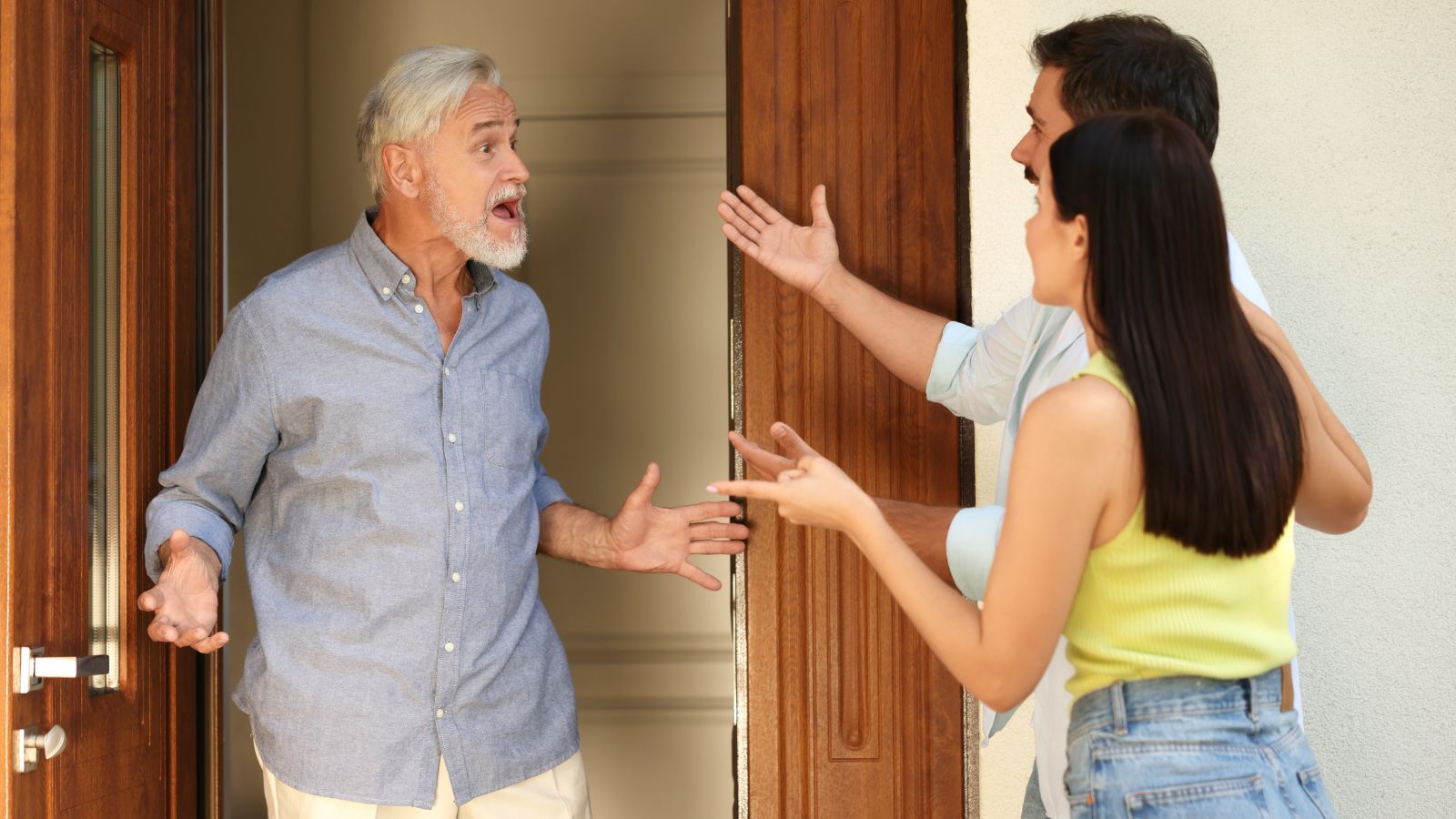
He Already Confronted His Afluent Neighbors About Their Dogs Using His Lawn as a Bathroom and Now They Are Putting Their Belongings on the His Car Hood Like It’s a Piece of Outdoor Furniture
He lives in a cul-de-sac where several affluent families have kids who play in the street regularly, and he and his wife both park on the street in front of their home. The neighbor situation has already required one conversation, about the dogs being let to roam freely and use his lawn as a bathroom without anyone cleaning it up. That issue is ongoing. Now there’s a second one that’s bothering him more.
This article may contain affiliate links. See our disclosure policy for more info.
The parents, not the kids, have been treating the hood of his car like a surface they’re entitled to use. Jackets, drinks, phones, and other personal items get set down on it while they stand around talking or watching their children play in the street. He finds it disrespectful and genuinely doesn’t understand the reasoning that would lead someone to put their belongings on another person’s vehicle without asking. He’s also bothered by what it signals to the children watching their parents do it.
Why this isn’t a minor irritation
A car hood isn’t a table, and the people using it this way aren’t strangers who don’t know any better. They’re neighbors who are presumably aware that the car belongs to someone on their street, and they’re making a repeated choice to use it as convenient furniture anyway. That’s different from someone accidentally brushing against a parked car or leaning on it briefly while tying a shoe. Setting down a jacket, a phone, and a drink on someone’s hood while standing there having a conversation is a sustained, deliberate use of property that doesn’t belong to you.
The scratch and paint damage risk is real even when the items being set down seem harmless. A phone with a metal case, a drink with condensation underneath it, a zipper on a jacket dragged across clear coat, any of these can leave marks on a car’s finish that are expensive to fix. The neighbors placing these items may not be thinking about any of that, but the fact that they’re not thinking about it is part of the problem. Using someone else’s property without permission requires thinking about whether it’s acceptable, and that calculation apparently isn’t happening.
The pattern that makes this harder to dismiss
The dog situation and the car situation together paint a consistent picture of neighbors who don’t extend much consideration to how their behavior affects the people around them. Having already needed to address the lawn issue and now watching the same group of people treat his car like shared neighborhood property suggests this isn’t a matter of a few people not realizing what they’re doing. It’s a recurring dynamic where the space around his home and his belongings is treated as available for whatever the neighbors find convenient.
That context matters because it changes how a second conversation needs to go. A first conversation about an isolated incident can be framed as a friendly heads-up. A second conversation about a different issue with the same people has to be clearer about the expectation, which is that his property isn’t communal, whether that’s his lawn or his car.
What a direct conversation actually needs to say
He doesn’t need to be confrontational, but he does need to be specific. Telling a neighbor in passing that he’d prefer they not set things on his car is clearer than a general comment about boundaries, and doing it in the moment when it’s happening is more effective than raising it after the fact. If the behavior continues after a direct request, the conversation gets shorter and more direct each time rather than longer and more explanatory.
It’s also worth saying something to the group rather than to one person at a time, since the behavior appears to be shared across multiple families rather than driven by one particularly oblivious neighbor. A single clear statement made once to the people involved is more efficient than a series of individual conversations that each start from scratch.
Whether he’s overreacting
He’s not. Expecting people not to set their personal belongings on your car is a baseline expectation, not a high standard. The fact that he parks on the street rather than in a driveway doesn’t change what the car is, which is private property that other people don’t have a right to use as furniture. Parking on a public street makes a vehicle accessible to passersby. It doesn’t make it available for neighbors to lean on, stack their things on, or treat as part of the shared outdoor space of a cul-de-sac where everyone feels at home.
Featured on Happy From Home:
- Father Who Searched for a Missing 4-Year-Old While Managing His Own Two Young Children Says the Boy’s Dad Who Was Home Watching TV Is Now Demanding an Apology From Him for Not Watching Closely Enough
- Woman Says Her Dad Threatened to Skip Her Graduation After She Told Him He Couldn’t Bring His Girlfriend of Eight Months to the Airbnb Her Mom Paid For