
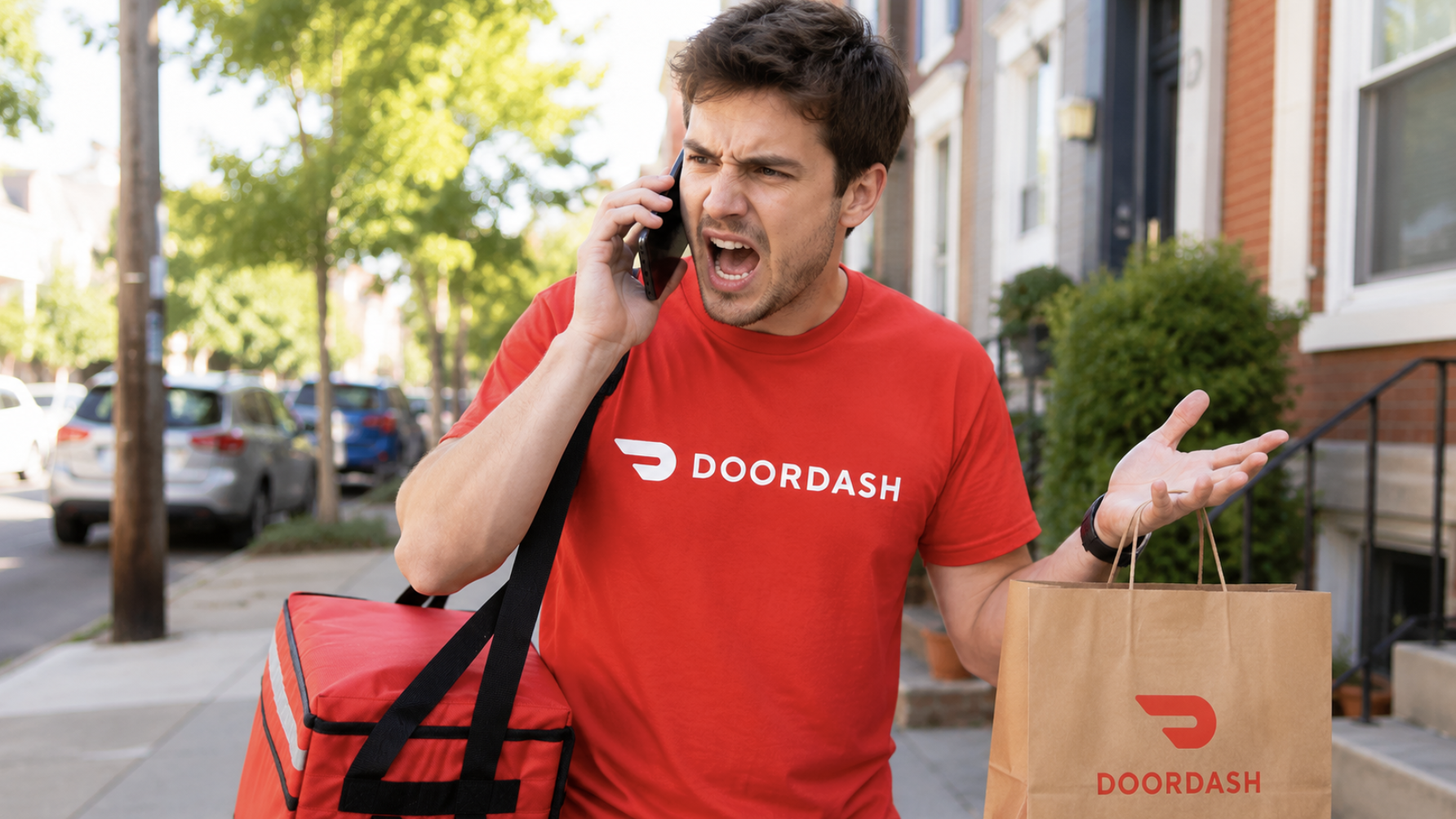
He’s Delivered 7,000 DoorDash Orders But Refused One From an Unlicensed Apartment Food Business, Was Told To Deliver It Anyway Until He Called Back and Got Legal Involved
He’d completed more than 7,000 deliveries as a driver at this point, enough that he’d seen just about everything the job could throw at him. So it stood out when he accepted an order, drove to the pickup address, and found what looked like a woman running a full food business out of her apartment, something that isn’t legal in his area without proper licensing and inspection, and nothing about the setup suggested she had either.
This article may contain affiliate links. See our disclosure policy for more info.
He called DoorDash support right away to explain what he was looking at. Instead of engaging with the actual concern, they put him on hold, called the customer directly to ask if they still wanted the order, then came back and told him to just go ahead and complete the delivery anyway.
Why He Wasn’t Willing to Just Drop It Off
He wasn’t going to let it go that easily. He explained again that if the business wasn’t properly licensed, it almost certainly wasn’t being inspected either, which meant this wasn’t a minor policy technicality he was raising. It was a legitimate food safety concern, the kind that could genuinely make someone sick if the food had been prepared without any oversight of cleanliness or handling standards.
He asked to speak with a supervisor at that point, since the first line of support clearly wasn’t treating the concern with the weight it deserved. After walking through the whole situation again, the supervisor told him they’d cancel the order, send a different driver to handle the pickup, and that he wouldn’t be paid anything for the time and effort he’d already put in.
Getting a Different Answer the Second Time Around
That outcome didn’t sit right with him, so he called back rather than accepting it. This time he reached a representative who handled it completely differently, immediately transferring him to the platform’s safety and legal departments instead of trying to resolve it at the support level. After explaining the situation one more time, the outcome shifted entirely, he was paid in full for the delivery rather than receiving partial compensation, and the business itself was temporarily suspended from the platform while an investigation got underway.
The whole process from start to finish took about 45 minutes, split across two very different experiences with DoorDash’s support system depending entirely on who happened to pick up the call. That inconsistency, one path leading to unpaid cancellation and another leading to full pay and an actual investigation, said something about how differently the same report could be handled depending on where it landed.
Why This Wasn’t Just About the Money
He was clear that this decision cost him time and initially looked like it might cost him pay entirely, and he made the call anyway because he wasn’t willing to hand off food he believed could put someone’s health at risk. Drivers get plenty of criticism for rushing through orders without much care, and he wanted to push back on the idea that all drivers operate that way, since plenty genuinely care about the people on the receiving end of these deliveries.
He also pointed out that situations like this carry real financial risk for the platform itself beyond just his individual delivery. If a customer gets sick from food sourced through an unlicensed, uninspected operation, the fallout doesn’t just land on the person who made the food, it damages trust in the entire platform that facilitated the order in the first place. Customers who get sick once generally don’t come back, and that kind of reputational damage compounds well beyond a single bad delivery.
Addressing the Pushback He Got Afterward
Some people criticized him for reporting the situation at all, which he pushed back on directly. He also anticipated the argument that home based food businesses are legal in plenty of places under cottage food laws, and acknowledged that’s true in many areas, but not where he lives. Locally, food businesses are required to operate out of licensed, inspected facilities, and there are shared commercial kitchens nearby specifically built for people starting food businesses, available to rent affordably by the hour or day.
That distinction mattered to him, since this wasn’t a case of an overzealous driver misunderstanding a legal gray area. It was a specific local requirement that wasn’t being followed, with legitimate, affordable alternatives readily available that would have made the operation compliant.
Where He Landed on It
He was upfront that DoorDash doesn’t pay drivers nearly enough for everything they navigate on a daily basis, but that frustration didn’t change his answer here. He wasn’t willing to knowingly deliver food from a place he believed was operating illegally and potentially unsafely, regardless of what it might have cost him in pay or hassle to push back on it.
What stuck with him most wasn’t really the money he almost lost or the 45 minutes it took to get someone to actually engage with the concern. It was the fact that the first two people he spoke with were ready to let the delivery go through without any real scrutiny, and it took reaching the right department before anyone treated the situation as something worth actually investigating.
Featured on Happy From Home:
- Woman Who Put Down $100,000 on Her House Before Her Boyfriend Moved In Says He Has Started Calling It a Waste of Money Because He Has No Legal Claim to It After Two Years of Contributions
- Father Who Searched for a Missing 4-Year-Old While Managing His Own Two Young Children Says the Boy’s Dad Who Was Home Watching TV Is Now Demanding an Apology From Him for Not Watching Closely Enough