
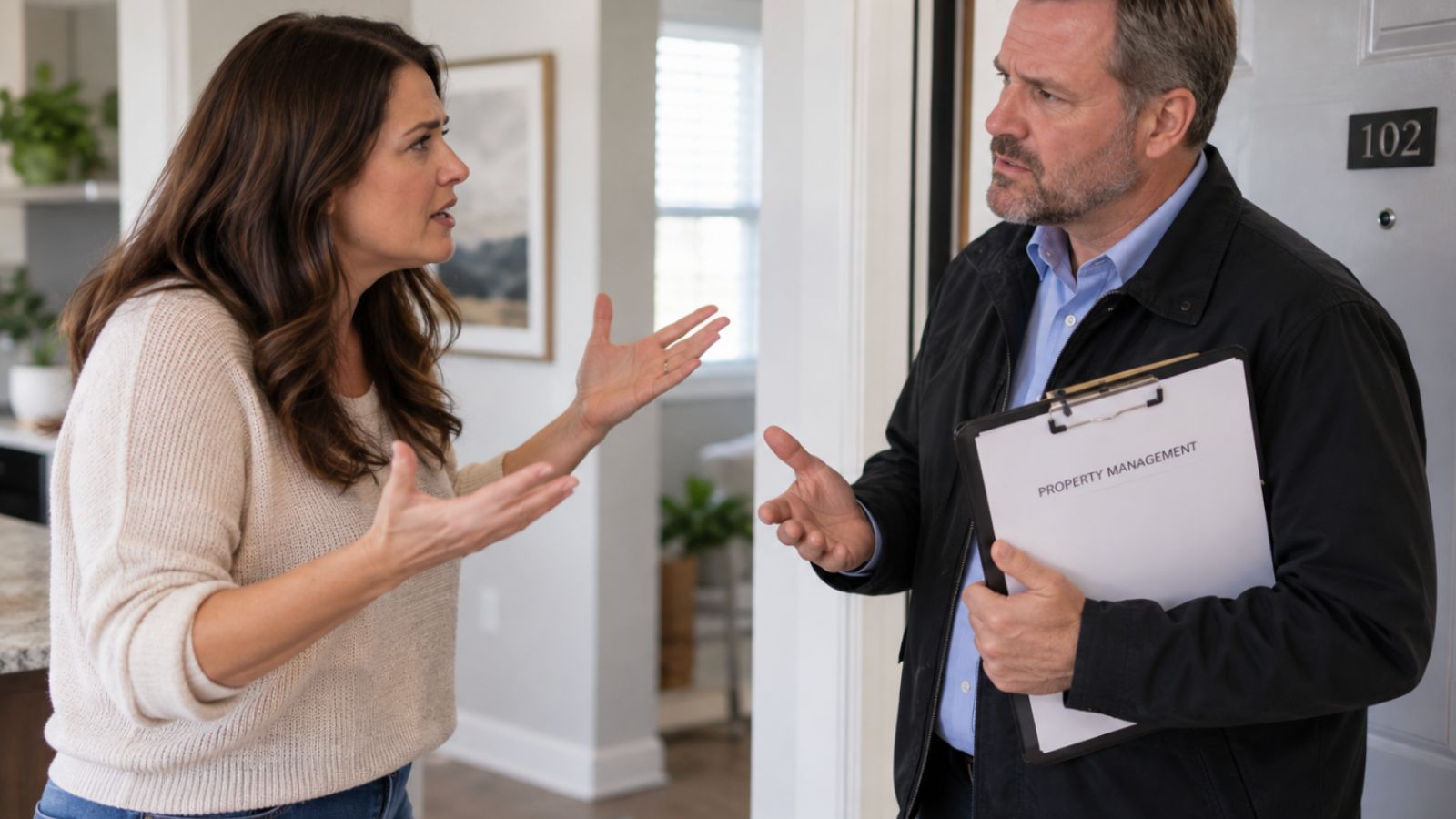
Her Landlord Secretly Rented Out Her Garage to a Stranger and Says She Has To Share it Because the “Space Wasn’t Being Used Enough”
Eight months into renting a small house with a detached two-car garage, the lease clearly lists the property address and specifically includes “house and garage” as part of what’s being rented. That language has been treated as straightforward, the garage has been used for bikes, tools, and general storage the entire time, shelves already going up and belongings already organized.
Yesterday, an unfamiliar man pulled into the driveway and unlocked the garage using his own key. What looked at first like someone at the wrong address turned out to be something else entirely, the landlord had separately rented the garage to him for storing landscaping equipment. Calling the landlord directly brought a dismissive explanation, that the space wasn’t being fully used and there was room for both parties. This person is now expected to show up multiple times a week.
The Lease Language Actually Settles This
If the lease explicitly names both the house and the garage as part of what’s being rented, that space is legally part of the leased premises, not a separate area the landlord retains rights to independently rent out to someone else. A tenant’s leasehold interest generally includes exclusive use of everything specifically listed in the lease, meaning the landlord doesn’t retain the right to grant a third party access to that same space without the tenant’s consent, regardless of whether every square foot is being actively used at any given moment.
The landlord’s justification, that the space wasn’t being fully utilized, doesn’t hold up legally. A tenant isn’t required to use 100% of a leased space at full capacity to retain exclusive rights to it. A garage used for bikes, tools, and general storage is being used exactly as intended, and partial use doesn’t create an opening for the landlord to lease out the “unused” portion to someone else.
Handing Out a Key Without Notice Is a Real Problem
Beyond the question of whether the space could be shared at all, giving a third party an actual key to part of the rented property, without any advance notice or agreement, raises a separate and serious issue. That person now has unsupervised access to a space containing tenant belongings, tools, and personal property, arriving multiple times a week without the tenants present or aware in advance each time. That’s a legitimate security and privacy concern independent of the lease violation itself.
Ohio law, like most states, generally requires landlords to provide reasonable notice before entering a rental property themselves, and that expectation extends even more clearly to authorizing a stranger’s independent access. A landlord retaining a spare key for emergencies or maintenance is standard. A landlord distributing keys to an unrelated third party for their own separate, unrelated use of leased space is a different situation entirely.
Documenting Everything From Here Forward
Given what’s already happened, keeping a written record matters considerably going forward. Noting the date and details of when this individual first showed up, saving any text or written communication with the landlord about the garage rental, and photographing the current state of the garage and any belongings already stored there would all help establish a clear timeline if this needs to be addressed more formally.
Sending a Written Objection Directly to the Landlord
A written communication, email or letter, stating clearly that the garage is explicitly included in the signed lease, that no consent was given for a third party to access or use the space, and requesting that the arrangement with this individual be terminated immediately, creates a formal record of the objection. This step matters regardless of whether the landlord responds cooperatively, since it establishes that the issue was raised directly and promptly once discovered.
Contacting Ohio’s Landlord-Tenant Resources or an Attorney
Given that this involves a signed lease being actively violated, along with an unauthorized party having physical access to shared space, reaching out to a local tenant rights organization or a landlord-tenant attorney for a consultation would help clarify exactly what formal options exist, whether that’s demanding immediate correction, pursuing a reduction in rent to reflect the loss of exclusive garage access, or in a more serious case, treating this as a breach of the lease agreement on the landlord’s part.
Where This Leaves the Situation
The lease language specifically naming the garage as part of the rented property is the strongest piece of leverage here, and it directly contradicts the landlord’s attempt to rent out “unused” space to someone else without consent. This isn’t a matter of simply feeling annoyed about an inconvenience, it reflects an actual breach of what was agreed to in writing, compounded by a real security concern created by handing a key to an unrelated third party. Raising this formally in writing, and following up with a tenant rights resource or attorney if the landlord doesn’t correct it, is a reasonable and necessary next step.
Featured on Happy From Home:
- Her Boyfriend’s Mother Called Her Job to Ask if She Was a “Person of Good Character” and Now She’s Questioning the Relationship
- Woman Who Put Down $100,000 on Her House Before Her Boyfriend Moved In Says He Has Started Calling It a Waste of Money Because He Has No Legal Claim to It After Two Years of Contributions