
She Was Followed to Her Car and Accused of Stealing a Bag She Already Owned, Walked Back Inside to Clear It Up in Front of a Manager, and the Clerk Was Fired for Doing the Same Thing to Customers Before
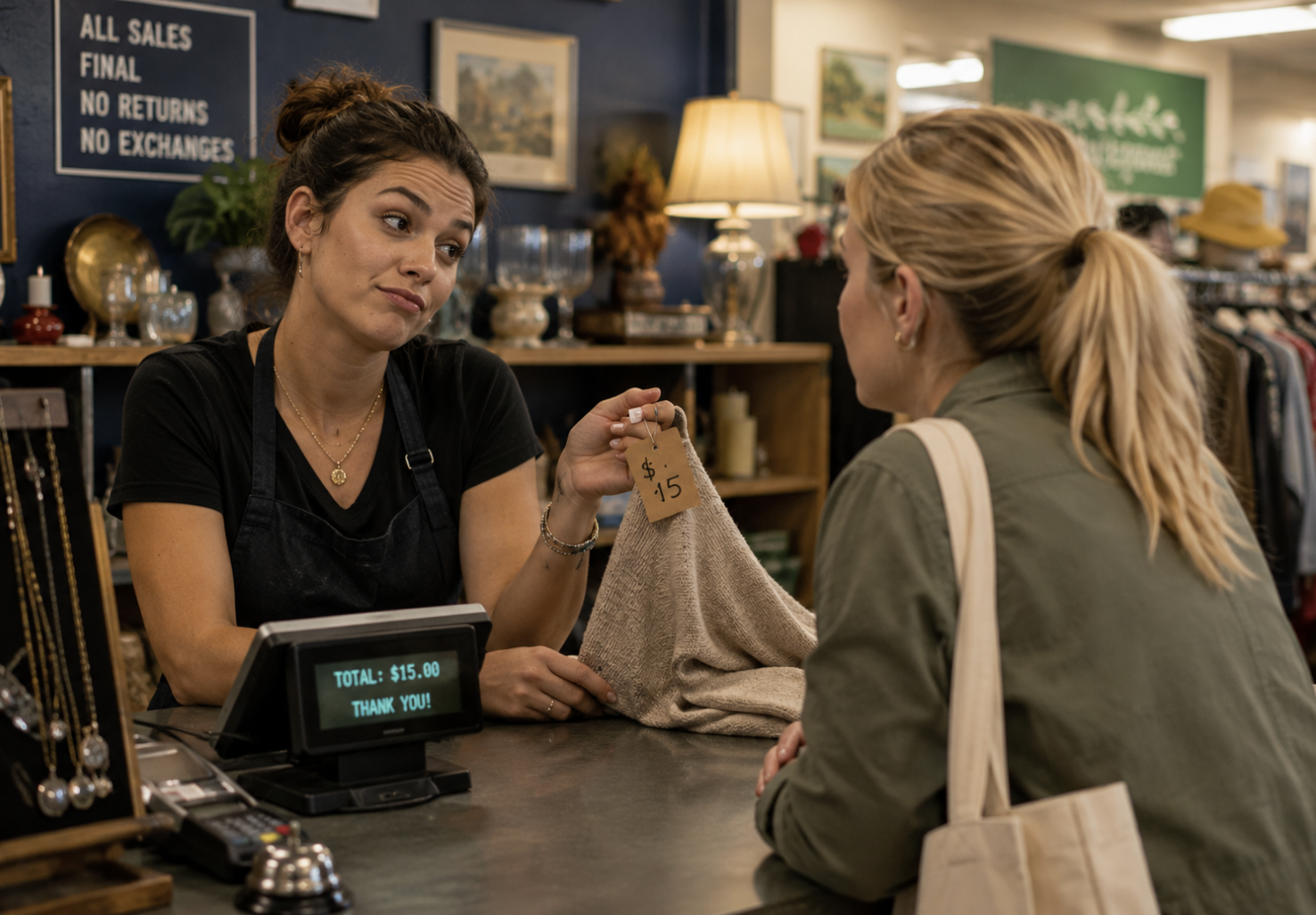
A corporate thrift store had introduced branded, reusable bags around the same time it rolled out self-checkout as the primary way to pay, and she’d bought one of those bags on an earlier visit specifically to reuse it going forward, exactly as intended. That earlier purchase became relevant when a routine shopping trip turned into an unexpected confrontation over the very bag she’d already paid for.
After checking out at self-checkout, she’d needed to buy a separate 20 cent paper bag for some lightweight items, since her heavier purchase called for her sturdier reusable bag and she hadn’t brought any additional bags along with her that day. Once she got to her car, she took a moment to connect her phone via Bluetooth and glance over her receipt before a front-end clerk knocked on her car window, accusing her of stealing a bag.
A Misunderstanding That Escalated Into Being Followed to Her Car
Assuming the clerk meant the paper bag, she showed her receipt reflecting that 20 cent charge, only to be told the accusation was actually about the reusable bag instead, the one she’d purchased on a prior visit and legitimately owned. The clerk then sternly asked her to come back inside to speak with a manager, an escalation that carried real weight given how minor the alleged theft would have been, on par with something as small as a CD or a pair of earrings, hardly the kind of situation that should have prompted an employee to follow a customer out to their car in the first place.
Most corporate retail policies across North America explicitly prohibit employees from chasing down or apprehending suspected shoplifters, a rule that exists specifically for employee safety, since confronting someone accused of theft, correctly or not, carries real physical risk if that person reacts poorly. Given that context, the clerk’s decision to follow her out to the parking lot represented a genuine policy violation, one carrying real safety implications regardless of whether the underlying theft accusation turned out to be accurate.
Why She Chose to Go Back Inside Rather Than Simply Explain in the Parking Lot
Rather than settling the matter on the spot in the parking lot, she deliberately chose to go back inside with her receipt, purchases, and bags in hand, specifically wanting the situation addressed properly in front of a manager and store cameras rather than resolved quietly and informally outside where nothing would be documented. That decision wasn’t about escalating unnecessarily, it reflected a genuine concern that the clerk needed to understand, through an actual consequence, just how unsafe her actions could have been if she’d tried the same approach with someone considerably more volatile than a calm customer willing to walk back inside and clear things up.
What Actually Happened Once She Was Back Inside
Once inside, she waited for the manager, someone she was already acquainted with as a regular customer, and explained the full situation. When the clerk kept talking over her during that explanation, both she and the manager had to ask the clerk to let her finish speaking, since the manager had specifically asked to hear her account first. She explained clearly that she’d purchased the reusable bag the previous week and had simply brought it back to reuse, exactly as the bags were designed to function. The manager’s reaction confirmed the obvious, that reusing the bag was precisely its intended purpose, resolving the theft accusation immediately once the full context was laid out clearly.
Why She Raised the Safety Issue Directly With the Manager
Beyond clearing up the immediate misunderstanding, she specifically pointed out to the manager that the employee had no business following a customer out to their car over a suspected theft, framing her decision to come back inside as a way of helping the employee understand that boundary for her own future safety rather than simply being upset about the false accusation it9. The manager agreed with that assessment, and the interaction ended on relatively good terms, with her including the employee in the closing conversation specifically to avoid leaving things on a sour note despite everything that had happened.
What Happened to the Employee Afterward
The employee was absent from the store for the following several weeks, and upon asking a friend who worked there as a production manager, she learned the employee had been let go specifically for violating the safety protocol around following and accusing customers of theft, apparently not the first time she’d been warned about that exact behavior while she was supposed to be stationed at the registers instead.
Why This Reflects a Reasonable Response Rather Than an Overreaction
Her choice to return inside and let the situation play out formally, rather than simply explaining herself in the parking lot and walking away, wasn’t driven by malice toward a minimum wage employee, a group she expressed genuine sympathy for given her own past experience in similar work. It reflected a considered decision that quietly resolving the situation outside, away from cameras and management, would have let a genuinely unsafe practice continue unaddressed, potentially putting the same employee at real risk the next time she tried the same approach with someone far less willing to calmly walk back inside and sort things out.
Featured on Happy From Home: