A Family Left Their Bag on an Empty Water Park Table for Hours, Then Got Angry When She Sat Down With Her 3-Year-Old To Eat
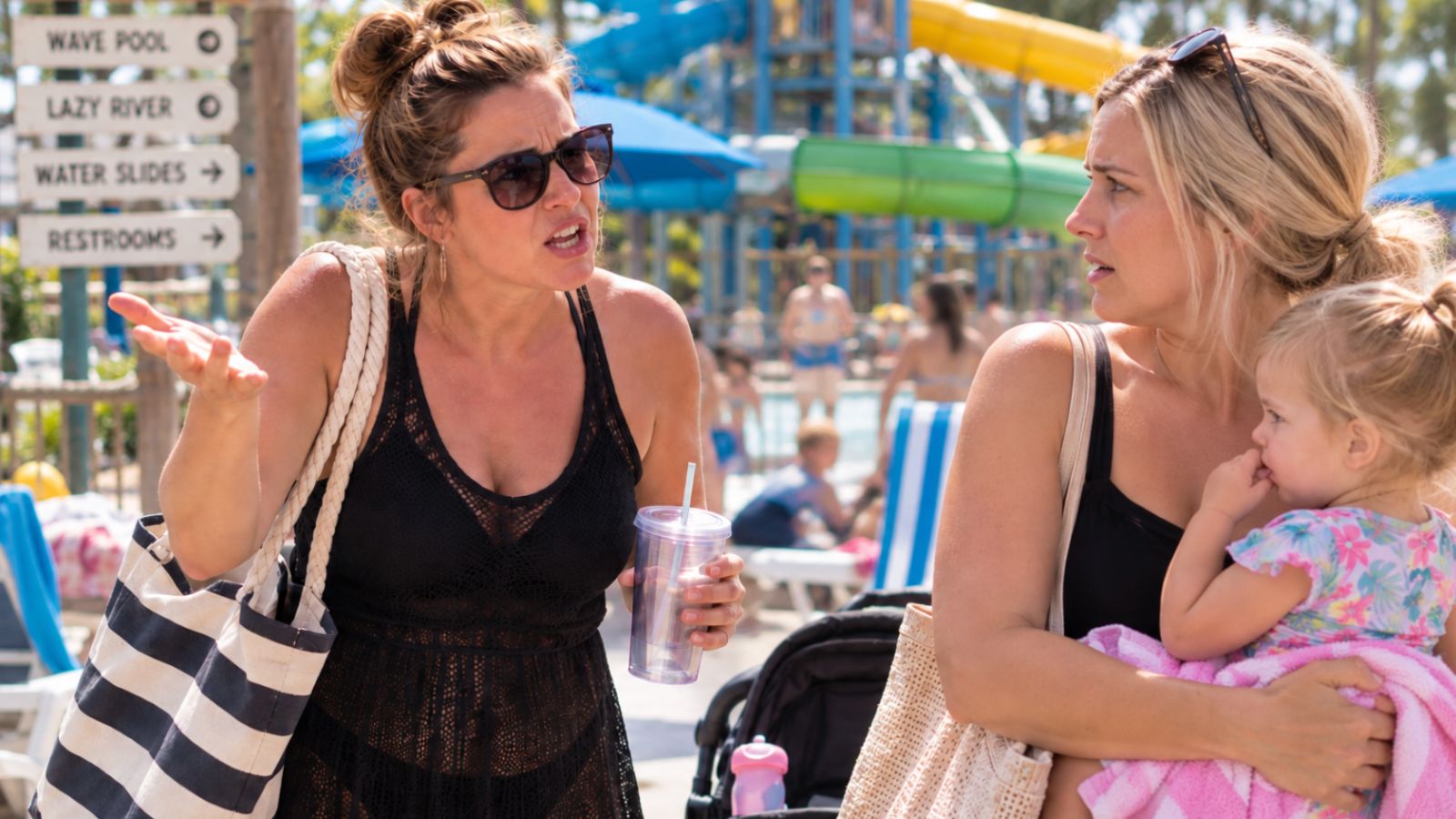
She and her boyfriend were trying to find somewhere to eat lunch with their 3-year-old at a water park, and every table was taken. Rather than a table full of people actually eating, one had only a bag and a lunch box sitting there, with no owners in sight. She moved those items to the edge of the table, reasoning that whoever left them was likely elsewhere in the park, and sat down with her family to eat.
About five minutes later, the family returned and sat down right next to them without saying anything at first. She offered a reasonable explanation, that there was nowhere else to sit and it looked like nobody was using the space. The response wasn’t gracious. The mother said they’d claimed the table since the park opened and suggested they go find seating elsewhere, adding that other families were doing the same thing and they should simply arrive earlier next time.
A Public Table Isn’t the Same as a Reserved One
Her framing of how shared tables at a public water park are supposed to work holds up. Tables in a shared eating area exist for people to use while actually eating, then vacate for the next group, not to be claimed for an entire day through an unattended bag left behind hours earlier. Treating a public seating area as personal territory simply because you got there first, then left, stretches the concept of “claiming a spot” well past what’s reasonable in a space designed for turnover.
The park itself apparently offers actual reserved seating, cabanas and day beds available for purchase specifically for people who want guaranteed space all day. That option existing directly undercuts the family’s argument that leaving a bag on a table functions as an equivalent, legitimate claim. If all-day reserved seating is something the park sells as a distinct paid feature, that’s a clear signal the regular tables aren’t meant to work the same way.
“Everyone Else Does It” Doesn’t Change the Actual Norm
The mother’s argument, that other people were also leaving bags unattended at tables, doesn’t actually justify the practice, it just describes a common workaround people use to avoid the reality that seating is limited and needs to be shared. A widespread habit of holding tables this way doesn’t make it a legitimate use of shared space, it just means a lot of people are quietly overusing a limited resource in the same way, which is part of why finding an open table in the first place was already difficult.
The Husband Crowding In Wasn’t a Reasonable Response
Once the disagreement started, the husband inching closer and crowding her boyfriend wasn’t a proportionate reaction to a five-minute misunderstanding over table space. That behavior escalated a mundane disagreement about seating into something more physically confrontational, and choosing to simply leave rather than engage further with that kind of pressure was the reasonable call, even though it meant eating snacks on a bench and finishing the toddler’s lunch in a stroller instead.
The Actual Disagreement
Moving an unattended bag to the edge of a public table, after waiting and finding no other seating available with a 3-year-old in tow, wasn’t unreasonable. The actual disagreement boils down to two different ideas about what a shared table is for, one where tables get used and then freed up for others, and one where leaving a bag behind functions as an all-day claim regardless of whether anyone’s sitting there. The first idea is the one that actually matches how public seating in a busy space is supposed to work, and the family’s frustration doesn’t change that.
Featured on Happy From Home:
- She Sold a Kiddie Couch She’d Owned for Two Years in a Non-Smoking Home and the Buyer Messaged Two Hours Later Saying It Smelled Like Cigarettes and Wants to Return It
- She Paid $140 to Cover Her Friend’s Birthday Dinner Last Year and Is Now Skipping This Year’s After Hearing Her Friend Is Already Planning to Treat Herself at an Even More Expensive Restaurant on Everyone Else’s Tab